Structural elements that pass through an insulated building envelope can create pathways for heat transfer, known as thermal bridging. This can reduce insulation effectiveness and contribute to condensation risks. For engineers, architects, building developers and builders, selecting a suitable thermal break involves considering the connection design, structural requirements and surrounding building envelope.
Insulation Wholesalers supplies thermal break materials for commercial and residential construction across New Zealand. Its range includes customised Thermax B® products for suitable framing applications, alongside Armatherm™ solutions for specific structural connections.
Key Specification Considerations
Selecting a thermal break requires evaluating the complete connection rather than considering the insulating material alone. The following factors should be assessed during the design process.
- Load requirements: Confirm the compressive, shear and moment loads that the connection must accommodate. The selected material must be suitable for the specified structural demands.
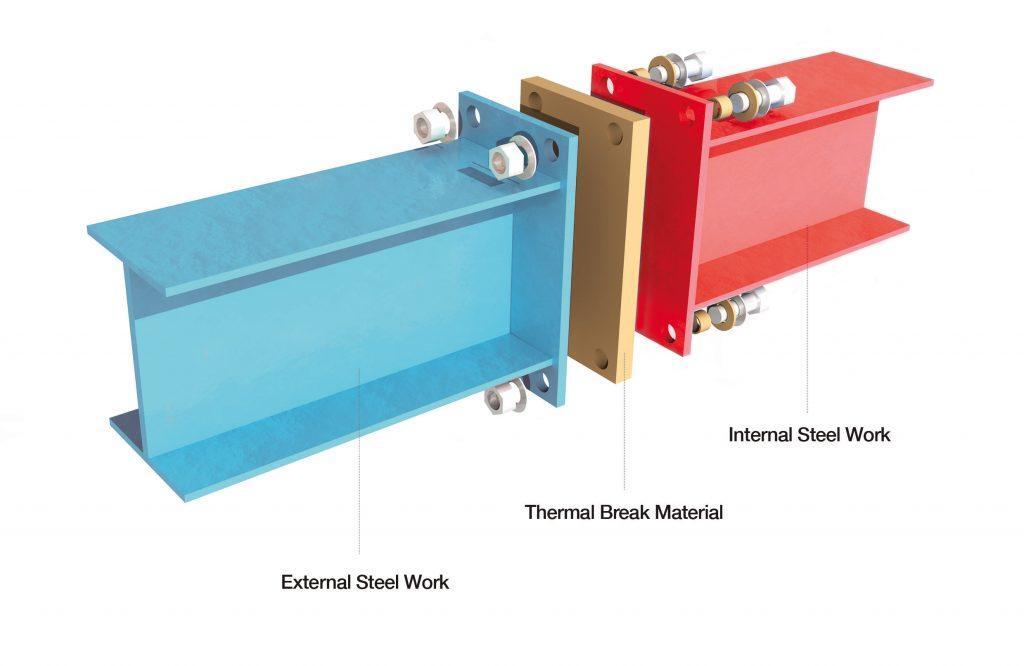
- Metal hardware: Bolts, plates, washers and other components can continue to transfer heat through a connection. Their effect on thermal performance should be considered in the overall design.
- Building envelope details: Coordinate the connection with surrounding insulation and moisture control measures to help manage condensation risks.
- Product suitability: Check that the selected material is intended for the proposed application and meets the project’s technical requirements.
Early coordination between structural engineers and the building envelope design team can help identify potential thermal bridges before construction begins.
Selecting the Right Thermal Break Solution
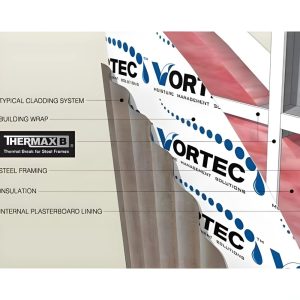
The appropriate product depends on the type of connection, its structural requirements and the intended application. Thermax B® is an important option for suitable light-gauge steel framing, while Armatherm™ products are designed for specific structural connection applications.
Product | Typical application | Key consideration |
Thermax B® | Suitable light-gauge steel framing applications | Available in customised widths and thicknesses to meet project requirements. |
Armatherm™ FRR | Suitable structural steel connections | Assess its documented performance against the loads and requirements of the connection. |
Armatherm™ 500 | Suitable load-bearing applications | Check its documented compressive performance and suitability for the proposed structural detail. |
These products are not interchangeable. Thermax B® should be used only where its technical documentation supports the intended application. Connections carrying structural loads require a product specifically suitable for those demands.
For building professionals, the objective is to select a solution that addresses thermal bridging while meeting the structural and installation requirements of the project.
Understanding Thermal Bridging in Steel Structures
Steel conducts heat more readily than many insulation materials. When a steel component crosses an insulated wall, roof or floor assembly, it can create a pathway for heat transfer.
This may reduce the effectiveness of the insulation and lower internal surface temperatures. Under suitable conditions, these cooler surfaces can increase the risk of condensation.
A correctly specified thermal break can help reduce heat transfer through selected connections. However, the overall result also depends on fasteners, connection geometry, insulation continuity and the surrounding materials.
Thermal breaks should therefore be considered as part of the complete building envelope design rather than as a standalone solution.
Five-Step Specification Checklist
Use the following checklist when planning thermal break details for a building project.
- Identify potential thermal bridges: Locate interruptions in the insulated envelope, including column bases, parapets, canopy beams and other structural connections.
- Verify structural capacity: Check the required compressive and shear capacity, any relevant moment loads and fastener requirements against the structural calculations and product documentation.
- Detail the connection: Account for conductive fasteners and associated hardware. Include suitable washers, bushings or other components where required by the engineered design.
- Assess condensation risks: Review internal surface temperatures, insulation continuity and moisture conditions to identify potential problems.
- Review technical documentation: Confirm the product’s intended use, load-bearing capacity, installation requirements and relevant fire performance information before finalising the specification.
Completing these checks early can help reduce design changes and improve coordination between the structural, architectural and construction teams.
Why Product Selection Matters
Different thermal break materials serve different purposes. Selecting a product based only on its insulating properties may overlook important structural or installation requirements.
For example, light-gauge steel framing and a bolted connection carrying significant loads may require different materials. The selected product must suit the connection design and meet the relevant technical requirements.
Thermax B® provides an option for suitable framing applications, including projects that require customised dimensions. For structural connections, engineers should assess whether Armatherm™ FRR or Armatherm™ 500 meets the requirements of the proposed detail.
Insulation Wholesalers supplies Thermax B® and Armatherm™ products to building professionals throughout New Zealand. Reviewing the relevant product data sheets helps ensure that the chosen material is appropriate for the intended application.
Conclusion
Selecting thermal breaks for structural connections requires careful consideration of structural capacity, heat transfer and building envelope detailing. Choosing a suitable product for each application can help manage thermal bridging while supporting the requirements of commercial and residential construction.
Thermax B® is an important option for suitable light-gauge steel framing applications, while Armatherm™ products may be appropriate for specific structural connections when their technical specifications meet the design requirements.
Insulation Wholesalers supplies thermal break solutions to building professionals across New Zealand. Contact us to discuss your project requirements and request relevant product data sheets to support your specification.
Frequently Asked Questions
Why are thermal breaks important in structural connections?
Structural elements can create conductive paths through an insulated building envelope. A suitable structural thermal break can help reduce this thermal bridge when correctly incorporated into the connection design.
What is Armatherm™ FRR used for?
Armatherm™ FRR is a structural thermal break material intended for appropriate structural connection applications. The specific suitability should be assessed against the project design and relevant technical documentation.
What is Armatherm™ 500 used for?
Armatherm™ 500 is a structural thermal break material with applications including structural locations such as column bases, parapets, roof penetrations and slab, foundation and wall connections, subject to project requirements.
What should engineers consider when specifying a structural thermal break?
Engineers should consider the structural connection, loading requirements, thermal bridge, building envelope, connection geometry, surrounding materials, installation requirements and applicable technical documentation.
Are all thermal breaks suitable for load-bearing applications?
No. Thermal breaks serve different purposes and product categories. A material should only be used for load-bearing or structural applications where its intended use and technical documentation support that application.