Moisture management is one of the most important considerations in commercial construction. Whether designing an office building, warehouse, industrial facility, or mixed-use development, controlling excess moisture is essential for maintaining building performance, protecting structural components, and creating healthier indoor environments. One of the most effective ways to achieve this is through well-designed ventilation systems.
For engineers, architects, building developers, and builders, incorporating the right ventilation strategy during the design phase helps minimise condensation, improve indoor air quality, and enhance the overall efficiency of the building. Proper ventilation works alongside quality insulation and building envelope solutions to create durable, high-performing commercial structures.
At Insulation Wholesalers, we supply premium rooftop ventilation solutions designed to support commercial, industrial, and residential projects throughout New Zealand. Our range includes reliable ventilation products that help improve airflow, reduce heat build-up, and minimise moisture-related issues.
Why Ventilation Matters in Commercial Buildings
Commercial buildings often contain large enclosed spaces where warm, moisture-laden air can accumulate. Without adequate ventilation, this trapped moisture may condense on cooler building surfaces, leading to a range of issues that affect both the structure and its occupants.
Effective ventilation helps regulate airflow by removing stale, humid air and replacing it with fresh outside air. This continuous air movement supports a healthier indoor environment while reducing the conditions that contribute to moisture damage.
Proper ventilation can assist with:
- Reducing condensation within roof cavities
- Improving indoor air quality
- Controlling excess humidity
- Supporting energy-efficient building performance
- Extending the lifespan of roofing materials
- Creating more comfortable working environments
When integrated into the overall building design, ventilation becomes an important component of long-term building performance.
Understanding Moisture Damage
Moisture damage does not always become visible immediately. In many commercial buildings, condensation develops gradually within roof spaces or enclosed cavities before signs become noticeable. Over time, excessive moisture can contribute to:
- Mould growth
- Damp insulation
- Timber deterioration
- Corrosion of metal components
- Reduced insulation performance
- Poor indoor air quality
These issues can affect the durability of the building while increasing ongoing maintenance requirements.
For building professionals, preventing moisture problems is considerably more effective than addressing them after construction has been completed.
Common Sources of Moisture in Commercial Buildings
Several factors contribute to moisture accumulation, including:
Internal Activities
People, equipment, kitchens, bathrooms, and manufacturing processes all release moisture into the indoor environment.
Weather Conditions
New Zealand’s varying climate means buildings regularly experience changing temperatures that can encourage condensation.
Roof Cavities
Roof spaces often trap warm air if ventilation is inadequate, allowing moisture levels to increase over time.
Poor Air Circulation
Without sufficient airflow, humid air remains trapped within enclosed spaces, increasing the likelihood of condensation.
Understanding these moisture sources allows engineers and designers to incorporate appropriate ventilation strategies early in the project.
How Ventilation Prevents Moisture Damage
Proper ventilation works by continuously moving air through the building and roof cavity. Instead of allowing warm, humid air to accumulate, ventilation systems encourage consistent airflow that removes excess moisture before condensation develops.
Key benefits include:
- Improved airflow throughout roof spaces
- Reduced humidity levels
- Lower condensation risk
- Better temperature regulation
- Healthier indoor environments
- Improved building durability
For commercial developments, these benefits contribute to better long-term building performance and reduced maintenance concerns.
Benefits of Rooftop Ventilation
Rooftop ventilation plays an important role in commercial construction because roof cavities are often where heat and moisture accumulate.
The rooftop ventilation solutions available through Insulation Wholesalers are designed to help commercial buildings achieve more effective airflow while supporting overall building efficiency.
Some of the key advantages include:
Benefit | How It Supports Commercial Buildings |
Reduced heat build-up | Helps lower temperatures within roof spaces |
Moisture control | Minimises condensation and mould risks |
Improved indoor air quality | Replaces stale air with fresh outside air |
Energy efficiency | Helps reduce the load on cooling systems |
Longer roof lifespan | Supports better protection of roofing materials |
Quiet operation | Suitable for a wide range of commercial environments |
These benefits make ventilation an important consideration for both new construction projects and building upgrades.
Choosing the Right Ventilation Solution
Every commercial building has different airflow requirements depending on its size, purpose, and design.
At Insulation Wholesalers, the ventilation range includes solutions suitable for various applications.
Hurricane Roof Turbines
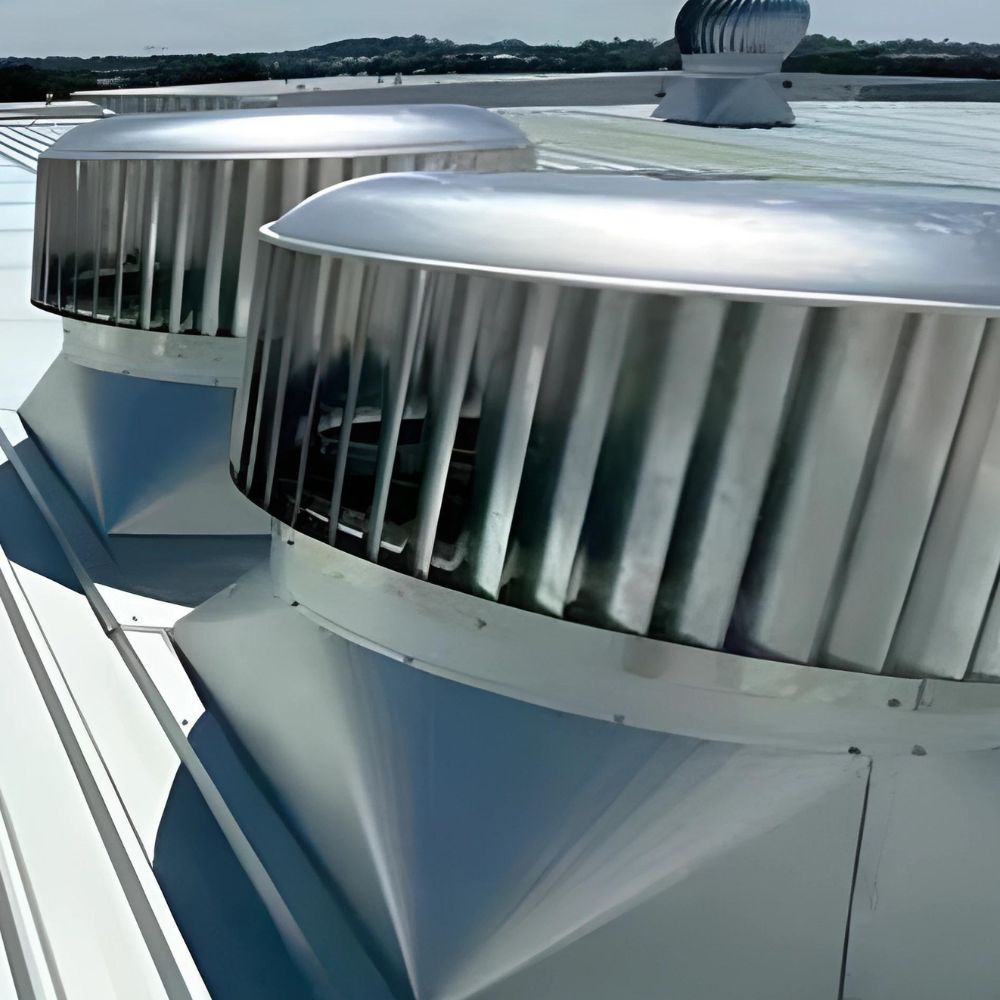
Hurricane Roof Turbines are designed for commercial and industrial rooftop ventilation where larger roof spaces require effective natural airflow.
They are particularly suitable for:
- Warehouses
- Manufacturing facilities
- Commercial buildings
- Industrial sites
These systems help remove warm air from roof cavities while supporting improved building ventilation.
Windmaster
Windmaster provides passive rooftop ventilation for light industrial and residential buildings.
Its natural ventilation approach makes it suitable for projects where continuous airflow is required without relying on complex mechanical systems.
Typical applications include:
- Residential developments
- Small commercial buildings
- Light industrial facilities
Windmaster supports healthier roof spaces while helping reduce moisture accumulation.
Turbo Beam: Combining Ventilation and Natural Light
For projects that require both effective airflow and increased natural lighting, Turbo Beam offers a practical solution. Unlike conventional rooftop ventilation products, Turbo Beam combines ventilation with the ability to introduce natural light into roof spaces.
This makes it a suitable option for a range of commercial and industrial environments where both occupant comfort and energy efficiency are priorities.
Typical applications include:
- Warehouses
- Workshops
- Commercial facilities
- Industrial buildings
- Storage facilities
By introducing daylight while promoting continuous airflow, Turbo Beam can contribute to a more comfortable and productive indoor environment.
Integrating Ventilation into Commercial Building Design
The most effective ventilation systems are considered during the early stages of a project. Engineers, architects, and builders should evaluate ventilation requirements alongside insulation, roofing, and the overall building envelope.
Planning ventilation early helps to:
- Improve long-term building performance.
- Reduce the likelihood of condensation issues.
- Support compliance with project performance requirements.
- Enhance occupant comfort.
- Improve operational efficiency throughout the building’s lifespan.
A well-planned approach also allows ventilation products to work effectively with other building components rather than being added as an afterthought.
Ventilation and Energy Efficiency
Commercial buildings are expected to deliver strong energy performance while maintaining comfortable indoor conditions. Proper ventilation supports these goals by helping regulate roof space temperatures and reducing the build-up of hot, stagnant air.
Some of the energy-related benefits include:
- Reduced load on air conditioning systems.
- More consistent indoor temperatures.
- Better airflow throughout the building.
- Lower heat accumulation within roof cavities.
- Improved overall building efficiency.
When ventilation forms part of a complete building design strategy, it contributes to healthier and more sustainable commercial environments.
Ventilation Works Best with a Complete Building Envelope
Although ventilation plays a vital role in moisture management, it performs best when combined with other quality building products.
For example, appropriate insulation helps minimise unwanted heat transfer, while effective thermal break solutions reduce thermal bridging through structural elements. Together, these systems contribute to improved building performance, greater energy efficiency, and enhanced occupant comfort.
Commercial projects that consider ventilation, insulation, and thermal break solutions as part of an integrated building envelope are better positioned to achieve long-term durability and reliable performance.
Best Practices for Engineers, Architects and Builders
When specifying ventilation for commercial projects, building professionals should consider:
- The building’s intended use.
- Roof design and available roof space.
- Local environmental conditions.
- Moisture-producing activities within the building.
- Long-term maintenance requirements.
- Compatibility with insulation and other building envelope components.
Selecting products appropriate for the project’s requirements helps maximise ventilation performance while supporting the overall objectives of the development.
Why Choose Insulation Wholesalers?
Insulation Wholesalers supplies premium rooftop ventilation solutions to commercial, industrial, and residential projects throughout New Zealand.
Building professionals choose Insulation Wholesalers because we provide:
- Premium rooftop ventilation products.
- Solutions suitable for commercial and industrial buildings.
- Reliable supply throughout New Zealand.
- Support for architects, engineers, developers, and builders.
- Products designed to improve airflow and building performance.
- Quality solutions that help reduce heat build-up and moisture-related issues.
Our centrally located warehouse enables efficient distribution to building sites across New Zealand, helping projects receive quality ventilation products when they are needed.
Conclusion
Effective ventilation is one of the most important elements in preventing moisture damage within commercial buildings. By improving airflow, reducing condensation, minimising heat build-up, and supporting healthier indoor environments, properly designed rooftop ventilation contributes significantly to long-term building performance.
Whether you are designing a warehouse, office, industrial facility, or commercial development, selecting the right ventilation solution during the planning stage can help protect your investment while improving occupant comfort and operational efficiency.
At Insulation Wholesalers, we supply premium rooftop ventilation solutions designed to meet the needs of New Zealand’s building industry. Our range includes Hurricane Roof Turbines, Windmaster, and Turbo Beam, providing reliable options for a variety of commercial applications.
If you are planning your next commercial project and need expert advice on selecting the right ventilation solution, Contact us today. Our team is ready to help you choose products that support healthier, more efficient, and longer-lasting buildings.
Frequently Asked Questions
Why is ventilation important in commercial buildings?
Ventilation removes excess heat and moisture, improves indoor air quality, and helps reduce condensation that may lead to moisture damage.
What ventilation products does Insulation Wholesalers supply?
Insulation Wholesalers supplies Hurricane Roof Turbines, Windmaster, and Turbo Beam rooftop ventilation solutions for commercial, industrial, and residential applications.
Can ventilation improve energy efficiency?
Yes. Effective ventilation helps reduce roof space temperatures and can lessen the load on cooling systems, contributing to improved energy efficiency.
Does ventilation work alongside insulation?
Yes. Ventilation and insulation complement each other by helping regulate indoor temperatures, managing moisture, and improving overall building performance.
Why choose Insulation Wholesalers for ventilation solutions?
Insulation Wholesalers provides premium rooftop ventilation products, nationwide supply across New Zealand, and solutions designed to support architects, engineers, builders, and developers.