Commercial insulation work is not just about keeping a building warm. It affects thermal performance, moisture control, energy use, construction detail, and long-term serviceability. For engineers, architects, quantity surveyors, specifiers, and installers, the practical question is not whether insulation matters, but how to choose and place it properly so the whole assembly performs as intended.
When planning insulation works for a commercial project, the main goal is to match the right product to the right building element. That means considering the structure, exposure, thermal target, installation method, and the way different materials behave in real conditions. In commercial builds, small detailing errors can reduce performance across the entire system, so the specification has to be clear from the start.
Why insulation works matter in commercial buildings
Commercial buildings lose and gain heat through roofs, walls, floors, slab edges, and service penetrations. If these areas are not properly insulated, the result is often poor temperature control, higher energy demand, and unnecessary strain on HVAC systems. That affects occupant comfort, running costs, and overall building performance.
Insulation also plays a role in moisture control. In buildings with large internal spaces, varying occupancy, or exposed construction zones, temperature differences can create condensation risk. Proper insulation helps reduce those swings by keeping internal surfaces closer to indoor air temperature.
For commercial teams, insulation works are usually part of a wider performance plan. The specification needs to balance:
- thermal resistance
- moisture conditions
- structural limits
- installation access
- long-term durability
- project budget
- compliance requirements
Insulation should be specified as an integral part of the building envelope, not as a standalone line item. Thermal performance depends on how insulation interacts with the framing, cladding, air barrier and junction details, and the design intent is only achieved when these elements are considered together.
How insulation works in simple terms
Insulation slows heat movement. It does not create heat. It reduces how quickly heat travels from one side of a building element to the other.
There are three main ways heat moves:
Conduction
This is heat moving through solid materials. It happens through framing, cladding, boards, and other building parts. Good insulation reduces that flow.
Convection
This is heat moving through air or liquid. In buildings, it often shows up as air movement in cavities or gaps. Insulation helps reduce unwanted movement when it is installed correctly.
Radiation
This is heat transferring through waves from a warm surface. Some insulation systems help reduce radiant heat gain, especially in roof areas.
The basic idea is simple. Insulation slows heat transfer so the building holds its internal conditions better. In commercial work, the real value comes from how well the product fits the system and how well the install is carried out.
What affects insulation performance
A product can have strong technical data on paper and still underperform on site. That happens when the system is poorly designed or badly installed.
R-value
R-value shows resistance to heat flow. Higher values generally mean better thermal resistance. But the highest number is not always the best choice for every part of the building. The right level depends on climate, building use, orientation, and the assembly type.
Thickness and density
These affect how a material performs, how much space it takes up, and how easy it is to install. In commercial projects, space can be tight, so those limits matter.
Material choice
Different materials suit different uses. A product that works well in a framed wall may not be right for a slab edge or a roof zone.
Installation quality
This is often the biggest issue. Gaps, compression, poor alignment, and missed areas reduce performance fast. Correct placement matters as much as the product itself.
Assembly design
Insulation has to work with the rest of the system, including vapour control layers, framing, cladding, fixings, and penetrations. If the rest of the build is not designed well, the insulation can only do so much.
Common commercial applications
Insulation works are used across many parts of a commercial building. The areas below are the most common ones to check during design and installation.
Roof and ceiling spaces
Roofs usually face strong solar exposure and significant heat gain or loss. Because of this, roof and ceiling zones are often a priority in commercial projects. Good roof insulation can reduce thermal load and improve internal comfort.
Wall systems
Walls represent a large surface area, so heat loss through them can be significant. Wall insulation helps reduce transfer and improve temperature stability across occupied spaces.
Floors and slab edges
Floors and slab edges can lose heat to the ground or external air. This is especially important in exposed sites, cold climates, and buildings with strict thermal targets.
Cavities and service zones
These areas are easy to overlook, but they matter. Thermal bridging, penetrations, and discontinuities often appear around cavities and service runs. Good detailing here improves the result across the whole envelope.
Comparing insulation materials for commercial use
Different projects call for different products. The table below gives a simple view of common material types and where they are often used.
Material type | Typical use | Key benefit | Important note |
Extruded polystyrene (XPS) | Slabs, perimeter areas, moisture-prone zones | Strong compressive resistance and moisture resistance | Useful where durability and load resistance matter |
Polystyrene EPS | Walls, roofs, boards, and general insulation applications | Lightweight and practical for many building types | Often selected where a simple board solution is needed |
Fibrous or batt insulation | Framed walls and ceilings | Fits cavity spaces well | Must be installed without compression or gaps |
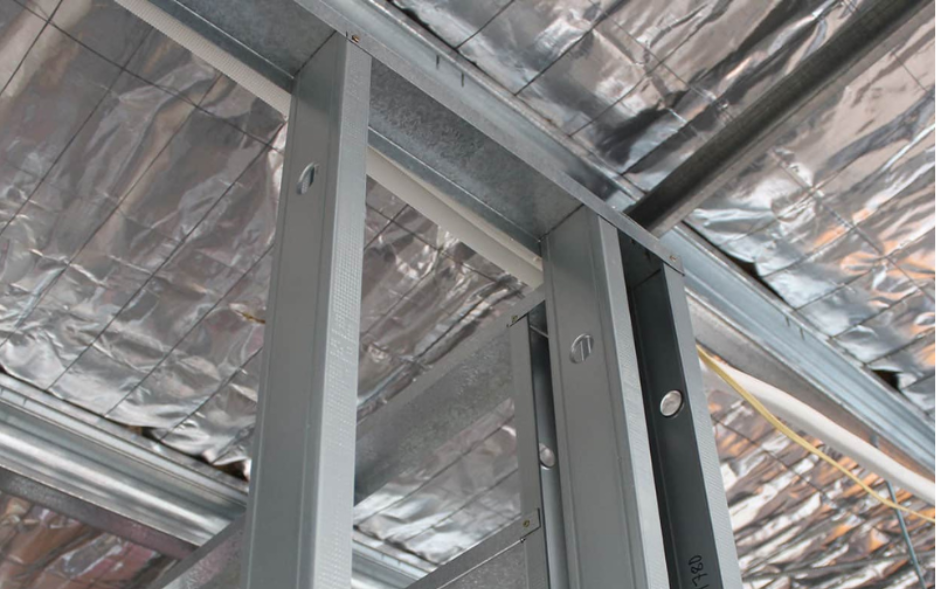
Reflective systems | Roof spaces and radiant heat zones | Helps reduce radiant heat transfer | Works best when installed as part of a suitable assembly |
For projects that need a firmer board product, extruded polystyrene is often considered because it offers good compressive strength and moisture resistance. That makes it suitable for areas where the insulation has to perform under load or in more exposed conditions.
In other areas, polystyrene EPS is often used because it is lightweight and practical for a wide range of applications. It is commonly selected when a board product is needed for general building envelope use.
Why specification detail matters
For commercial users, poor insulation outcomes often come from weak documentation rather than bad products. If the specification does not clearly state what is required, the installed result can vary from what was designed.
A good insulation specification should address:
Performance requirement
What thermal target needs to be met, and where?
Location
Is the insulation going into a roof, wall, floor, cavity, or slab edge?
Product type
What material is suitable for that application?
Moisture exposure
Will the area face damp conditions, condensation risk, or direct exposure?
Installation method
How should the product be fitted, fixed, or protected?
Continuity
How are joints, gaps, edges, and junctions handled?
This is the kind of detail that prevents later problems. It also makes it easier for installers to work to a clear standard rather than guessing what the designer meant.
How insulation supports energy performance
A well-insulated building usually needs less heating and cooling to stay within target conditions. That means lower system demand and more stable internal temperatures.
In commercial spaces, this can support:
- reduced energy use
- better occupant comfort
- lower operating costs
- improved building consistency
- less strain on mechanical systems
The result is not always dramatic in the first week. The value usually becomes clear over a season or a full year, especially in buildings with long operating hours or high internal loads.
Moisture and condensation control
Insulation is not a complete moisture solution, but it can help reduce condensation risk. Condensation often happens when warm, moist air meets a cold surface. If insulation helps keep that surface closer to indoor temperature, the risk can fall.
That matters in commercial buildings with:
- large temperature differences
- roof cavities
- external walls
- cold storage zones
- humid interior conditions
- high occupancy
The key point is that insulation works best when it is part of a wider plan that also includes ventilation, vapour control, and good detailing.
Choosing the right insulation approach
There is no single material that suits every commercial project. The best choice depends on the application and the performance target.
A practical way to approach insulation works is to ask:
What part of the building is being insulated?
A roof, wall, floor, or slab edge will need a different solution.
What conditions will it face?
Moisture, compression, temperature swings, and access all matter.
What does the design need to achieve?
Thermal control, moisture resistance, durability, or all three.
How will it be installed?
If the install is difficult, the product should suit the site conditions.
How will continuity be maintained?
Junctions and penetrations should be considered early, not at the end.
If a project team needs clarity on product fit or installation detail, it is better to confirm the requirements early. For that reason, many commercial teams choose to contact us before finalising a specification.
Common mistakes in commercial insulation works
Choosing a product for the wrong application
A board product may be right for one area and unsuitable for another. The building element should drive the selection.
Ignoring thermal bridges
Junctions, fasteners, framing, and penetrations can all reduce thermal performance if they are not handled properly.
Compressing the product
Compressed insulation usually performs worse than properly fitted insulation.
Leaving gaps
Even small gaps reduce continuity and lower the final result.
Focusing only on upfront cost
The cheapest option is not always the best value if it underperforms or causes later issues.
Practical considerations for specifiers and installers
For engineers, architects, QSs, and installers, the best outcomes usually come from clear coordination.
Specifiers should define the performance target, material type, and installation expectations. Installers should follow the detail, protect the product, and maintain continuity through the full assembly. QSs should make sure the scope reflects the actual work required, including the areas that are easy to miss.
In other words, insulation works are not just about filling space. They are about creating a controlled thermal layer that supports the building as a system. That is what turns a decent product into a useful part of the project.
Conclusion
Insulation works play a major role in how commercial buildings perform. They help control heat transfer, support energy efficiency, reduce condensation risk, and improve comfort across the building envelope. For commercial teams, the main task is to choose the right product for the right place and install it correctly.
That means paying attention to R-value, material type, exposure conditions, and detailing at junctions and penetrations. It also means making sure the specification is clear enough for the site team to follow without confusion. A good result depends on the whole system, not just the insulation itself.
For more information on commercial insulation products and supply options, visit Insulation Wholesalers Limited.
FAQ
What do insulation works mean in a commercial project?
They refer to the supply, specification, and installation of insulation across building elements such as roofs, walls, floors, and slab edges.
Why is insulation important for commercial buildings?
It helps control temperature, reduce energy use, improve comfort, and support moisture management.
Which insulation material is best for commercial use?
There is no single best material. The right choice depends on the building area, exposure conditions, load requirements, and performance target.
What is the role of R-value?
R-value shows how well a material resists heat flow. It is one of the main measures used when comparing insulation performance.
Can insulation reduce condensation risk?
Yes, it can help reduce condensation by keeping internal surfaces closer to room temperature, though ventilation and detailing also matter.
Why is installation quality so important?
Poor installation creates gaps, compression, and weak spots that reduce performance even when the product itself is suitable.
Where should commercial teams start?
Start with the building element and the performance requirement. Then match the product to the application and confirm the installation detail.